
How Long It Really Takes to Charge an EV With a Level 2 Home Charger
A Level 2 home charger is the most popular way to power an electric vehicle in a garage or driveway, and the real charge time surprises a lot of new EV owners. The honest answer is that most drivers add a full day of range overnight, but the exact number of hours depends on several factors working together. A Level 2 home charger runs on a 240 volt circuit and delivers far more power than a standard wall outlet, which is why it has become the standard for daily home charging. Many people assume the charger alone sets the speed, when the truth is that your vehicle, your battery size, and your electrical panel all play a role. Summer is when a lot of Texas families finally commit to home charging, since road trip season and rising electricity demand push them to plan ahead. Understanding the math behind charge times helps you set realistic expectations and avoid frustration on busy mornings. This guide breaks down the numbers in plain language so you know exactly what to expect from your setup. By the end, you will understand why a properly sized Level 2 home charger makes daily driving simple and stress free.
What Determines How Long a Level 2 Home Charger Takes to Charge an EV
The charge time of any Level 2 home charger comes down to a handful of measurable factors, and once you understand them the guesswork disappears. The first factor is the power output of the charger itself, measured in kilowatts, which is set by the amperage of the circuit it runs on. The second factor is the size of your vehicle battery, since a larger battery simply holds more energy and takes longer to fill. The third factor is your vehicle onboard charger, a built in component that caps how much power your car will actually accept. Temperature, starting battery level, and your electrical panel capacity round out the list. When you put these pieces together, you can predict your charge time within a fairly tight window. A professional EV charger installation makes sure each of these factors works in your favor rather than against you.
How Charger Amperage Affects Level 2 Home Charger EV Charge Time
The amperage of your Level 2 home charger is the single biggest factor you control, and it directly sets how fast energy flows into your battery. Most residential Level 2 chargers are rated at 32 amps, 40 amps, or 48 amps, and each step up adds meaningful charging power. A 32 amp charger delivers roughly 7.7 kilowatts, a 40 amp charger delivers about 9.6 kilowatts, and a 48 amp charger pushes close to 11.5 kilowatts. That difference is large; a 48 amp unit can charge nearly fifty percent faster than a 32 amp unit on the same vehicle. In practical terms, more amperage means more miles of range added per hour plugged in. A 32 amp charger typically adds around 25 miles of range per hour, while a 48 amp charger can add 35 to 40 miles per hour. Choosing the right amperage at the start saves you from upgrading again later.
It is important to understand how electrical code shapes these amperage numbers, because a charger cannot run at its maximum rating around the clock without protection. A car charger is treated as a continuous load, so the National Electrical Code requires the circuit to be sized at 125 percent of the charger draw. This means a 48 amp charger must sit on a 60 amp breaker and circuit, and a 40 amp charger must sit on a 50 amp breaker. These rules exist to prevent overheating and keep your home safe during long charging sessions. Skipping this sizing creates a real fire risk and almost always fails inspection. A licensed electrician calculates these loads correctly so your charger performs at full speed safely. This is one reason a do it yourself install often leads to disappointing or unsafe results.
The amperage you can actually use also depends on what your home electrical system can support, which many homeowners overlook. A 48 amp charger needs a 60 amp dedicated circuit, and not every panel has that capacity available without changes. If your panel is already near its limit, an electrician may recommend a service upgrade or a load management device to make room. The good news is that these solutions are common and well understood by professionals who install chargers daily. Matching the charger amperage to your panel ensures you get the fast charge times you paid for. A proper assessment up front prevents tripped breakers and slow charging down the road. The result is a charger that runs at full power every single night without complaint.
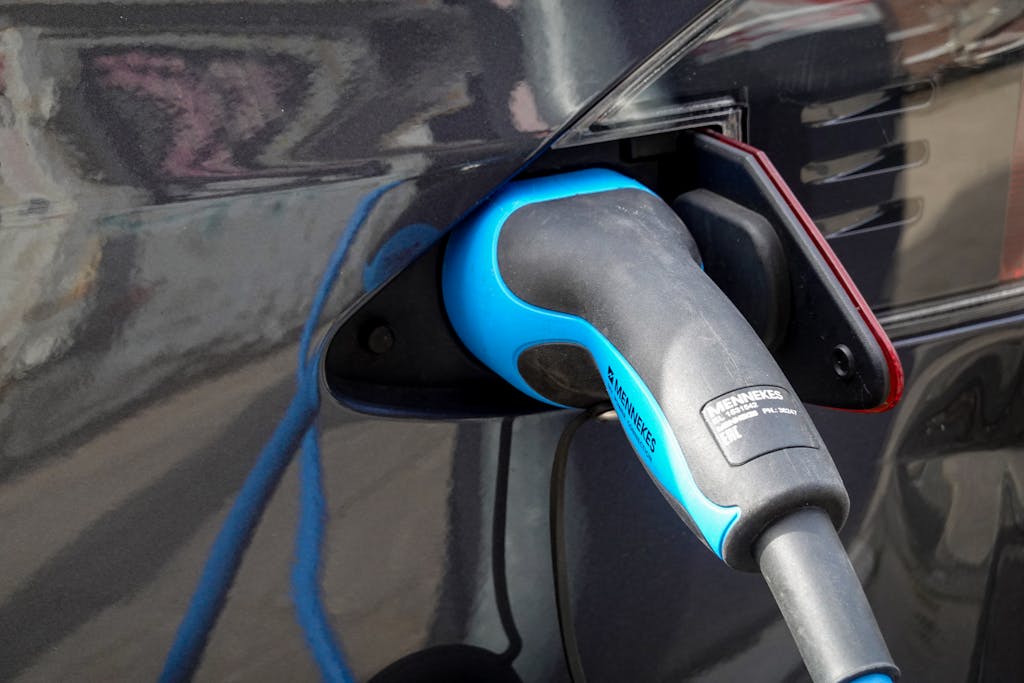
How Your EV Battery Size Affects Level 2 Home Charger Charge Time
Battery size is measured in kilowatt hours, and it is the simplest way to understand why two EVs charge at very different speeds on the same Level 2 home charger. A compact electric car might carry a 60 kilowatt hour battery, while a large electric truck or SUV can carry 100 kilowatt hours or more. The bigger the battery, the more total energy it needs to reach a full charge, even when the charging power stays the same. Think of it like filling two different sized water tanks from the same hose; the larger tank simply takes longer. This is why a small commuter car can charge overnight with ease while a heavy truck may need a full evening and night. Knowing your battery capacity gives you the starting point for every charge time estimate. Your owner manual lists this number, usually labeled in kilowatt hours.
To put real numbers to it, consider a 60 kilowatt hour battery on a 40 amp charger delivering 9.6 kilowatts of power. Filling that battery completely from empty would take roughly six and a half hours of charging time. Most drivers never charge from zero, though, since daily use only drains a portion of the pack. A more realistic scenario is charging from 20 percent to 80 percent, which represents about 36 kilowatt hours of energy on that same battery. That partial charge takes closer to four hours, which fits comfortably into an overnight window. These numbers shift up or down based on your specific charger and vehicle, but the pattern holds true. Smaller batteries and partial charges mean shorter sessions every time.
Larger batteries change the math in ways that matter for planning, especially for families with trucks or three row electric SUVs. A 100 kilowatt hour battery on that same 9.6 kilowatt charger would take around ten and a half hours to fill from empty. That length can stretch past a single overnight window if you arrive home with a nearly dead battery. This is exactly where a higher amperage charger earns its value, since an 11.5 kilowatt unit shaves hours off that time. Drivers with large batteries often benefit most from a 48 amp EV charger installation paired with the right circuit. The bigger your battery, the more a faster charger pays off in daily convenience. Planning your charger around your actual battery size keeps you from ever waking up to a half charged vehicle.
How Your Vehicle’s Onboard Charger Limits Level 2 Home Charger Speed
The onboard charger is the most misunderstood part of EV charging, and it can quietly cap your speed no matter how powerful your wall unit is. Every electric vehicle has a built in onboard charger that converts the alternating current from your home into the direct current the battery stores. This component has a maximum acceptance rate, and your car will never pull more power than that rate allows. If your vehicle onboard charger maxes out at 7.2 kilowatts, plugging into an 11.5 kilowatt wall charger will not make it charge any faster. The car simply takes what it can handle and ignores the rest of the available power. This is a hardware limit set by the automaker, not something an installer can change. Checking this spec before buying a charger prevents paying for speed your car cannot use.
Onboard charger ratings vary widely across makes and models, which is why two neighbors with the same wall charger can see different charge times. Many popular EVs accept 7.2 kilowatts or 9.6 kilowatts, while others accept the full 11.5 kilowatts that a 48 amp charger provides. Some performance models and trucks go even higher with optional charging packages. The point is that your slowest link sets your real charge speed, like water moving through the narrowest pipe in a line. If your car onboard charger and your wall charger are matched well, you get the full benefit of your setup. A mismatch wastes either money or potential speed. Knowing both numbers lets you build a system with no weak link.
The smart approach is to choose a Level 2 home charger that matches or slightly exceeds your current vehicle onboard charger rating. Buying a 48 amp charger today is a reasonable choice even if your current car only accepts 7.2 kilowatts, because your next EV will likely accept more. This future proofs your install and protects your investment for years. A licensed electrician can help you weigh your current needs against your future plans. The wiring and circuit you install now will outlast several vehicles, so building in headroom is wise. Matching these specs correctly is the difference between a charger that just works and one that works at full speed. A short conversation with a professional clears up exactly what your home and your car need.
Real Charge Times You Can Expect From a Level 2 Home Charger
Now that you understand the factors, real world charge times become easy to predict for almost any EV on a Level 2 home charger. The fastest way to think about it is in miles of range added per hour rather than total fill time, since that is what affects your daily routine. A typical Level 2 home charger adds somewhere between 25 and 40 miles of range for every hour your car is plugged in. Since the average driver covers around 40 miles a day, even a few hours of charging easily replaces a full day of driving. This is why most EV owners simply plug in when they get home and unplug fully charged in the morning. The exact figures shift with your charger amperage, your battery, and your vehicle onboard charger. Below are the common scenarios most Texas drivers actually experience.
Level 2 Home Charger Charge Times for Small EV Batteries
Small and midsize electric cars are the easiest vehicles to charge at home, and a Level 2 home charger handles them with room to spare. A car with a 60 kilowatt hour battery represents a huge share of the EVs on the road today, including many popular commuter models. On a 40 amp charger delivering 9.6 kilowatts, this car gains about 30 miles of range per hour of charging. That rate means a typical daily commute of 40 miles is replaced in well under two hours. Even arriving home with a low battery, you reach a comfortable charge level long before bedtime. These vehicles rarely need any special panel work because their power demands are modest. For most families, a small battery EV and a Level 2 charger is a perfect, worry free match.
The overnight reality for these smaller batteries is genuinely simple and convenient once the charger is installed. Plugging in at 8 in the evening with a 30 percent battery leaves you with a completely full charge by midnight on a 40 amp unit. You never have to think about gas stations or charging stops for normal around town driving. This convenience is the main reason so many owners say home charging is the best part of EV ownership. A smaller battery also means slightly lower electricity costs per full charge, which adds up over a year. The combination of quick charge times and low cost makes these vehicles ideal for home charging. A correctly sized charger turns a daily chore into something you stop thinking about entirely.
Even a 32 amp charger serves small battery EVs perfectly well, which gives budget conscious buyers a solid lower cost option. At 7.7 kilowatts, a 32 amp unit still adds around 25 miles of range per hour to that 60 kilowatt hour car. Charging from 20 percent to 80 percent takes roughly five hours, which still fits easily within an overnight window. For drivers who plug in every night, this slightly slower rate is barely noticeable in daily life. The lower amperage can also mean simpler installation if your panel has limited capacity. Many homeowners find this the sweet spot of cost and speed for a single small EV. A professional can confirm whether a 32 or 40 amp unit best fits your home and your driving habits.
Level 2 Home Charger Charge Times for Large EV Batteries and Trucks
Large electric trucks and three row SUVs are the heavyweights of home charging, and they reveal exactly why charger amperage matters so much. A vehicle with a 130 kilowatt hour battery holds more than twice the energy of a compact EV, so it naturally takes longer to fill. On a 40 amp charger, filling that large pack from low to full can stretch toward twelve hours or more. That length pushes the limits of a single overnight session, especially if you arrive home late with a nearly empty battery. Drivers of these vehicles quickly learn that a higher amperage charger is not a luxury but a practical need. The bigger your battery, the more every extra amp of charging power helps you each night.
Stepping up to a 48 amp charger transforms the experience for large battery owners in a meaningful way. At 11.5 kilowatts, that same large truck gains around 35 to 40 miles of range per hour, assuming the vehicle onboard charger can accept it. Filling from 20 percent to 80 percent drops to roughly seven hours, which comfortably fits within a normal overnight window. This faster rate means you wake up to a full battery even after a long day of driving. For households that tow trailers or drive long distances, this speed makes EV ownership genuinely practical. The investment in a 48 amp setup pays for itself in convenience almost immediately. A proper EV charger installation ensures your large vehicle gets the full power it needs.
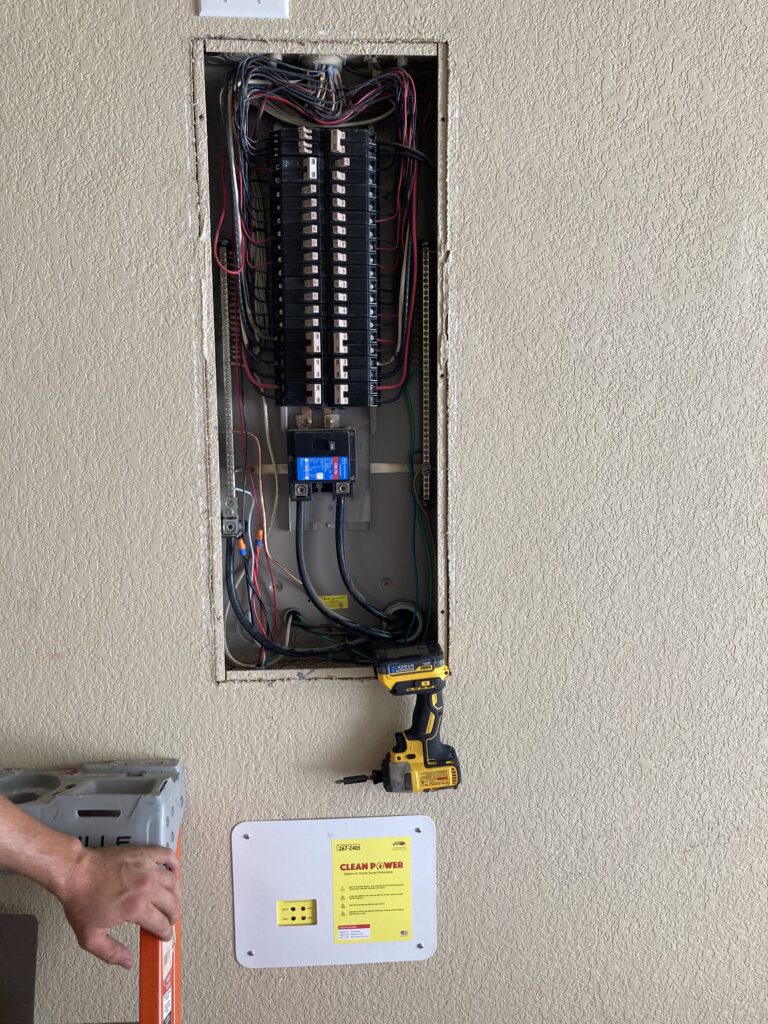
Large battery vehicles almost always require a closer look at your home electrical system before installation. A 48 amp charger needs a 60 amp dedicated circuit, and many older panels do not have that capacity to spare. In these cases an electrician may recommend a service upgrade or a smart load management device to free up power. These solutions are routine and ensure your charger runs at full speed without overloading your home. Skipping this step leads to tripped breakers and frustratingly slow charging. A professional assessment catches these issues before they ruin your charging experience. For big batteries, getting the electrical foundation right is just as important as the charger itself.
How Texas Summer Heat Affects Level 2 Home Charger Charge Times
Summer heat in Texas has a real effect on EV charging that many drivers do not expect during the hottest months. Lithium ion batteries perform best within a moderate temperature range, and extreme heat pushes them outside that comfort zone. When your battery gets very hot, the vehicle thermal management system runs harder to keep it cool, which uses some of the incoming power. This can slightly slow your effective charge rate during the peak of a hot afternoon. Charging in a shaded garage or during the cooler overnight hours helps your battery stay in its ideal range. Most home charging happens at night anyway, which conveniently avoids the worst of the daytime heat. Understanding this seasonal effect helps you plan charging around the Texas climate.
Heat also affects your overall driving range, which indirectly changes how often and how long you charge in summer. Running the air conditioning hard in July and August draws extra energy from the battery while you drive. This means you may arrive home with a lower charge than you would in milder weather, requiring slightly longer charging sessions. The effect is usually modest, but it is noticeable across a full summer of daily commuting. Planning to plug in every night keeps your battery topped off and ready for the next hot day. A reliable Level 2 home charger makes this easy by replacing a full day of range overnight. Consistent home charging is the best defense against summer range loss.
Overnight charging during summer carries one more practical benefit that affects your electricity bill. Texas electricity demand peaks during hot afternoons and early evenings when air conditioners run statewide. Charging your EV late at night shifts your load to cooler, lower demand hours, which can mean lower rates on many time of use plans. This timing protects both your wallet and the stability of the local grid. A smart charger can be scheduled to start automatically during these off peak windows. Pairing smart scheduling with a properly installed Level 2 charger is the most efficient way to charge in a Texas summer. A professional can set up this scheduling so the savings happen automatically every night.
Why You Need a Professional Level 2 Home Charger Installation
A Level 2 home charger draws serious power, and a professional installation is the only safe and reliable way to bring that power into your home. These chargers run on 240 volt circuits at high amperage, which demands correct wiring, breaker sizing, and panel capacity. A licensed electrician follows the National Electrical Code to protect your home, your family, and your investment. Cutting corners on a high power circuit creates a genuine fire risk and almost always fails inspection. Professional installation also ensures your charger runs at full speed instead of tripping breakers or charging slowly. The difference between a quick safe charge and a frustrating one usually comes down to who installed the circuit.
Why a Dedicated Circuit Matters for Your Level 2 Home Charger
A Level 2 home charger must run on its own dedicated circuit, and this is one of the most important parts of a safe installation. A dedicated circuit means the charger has its own breaker and wiring with nothing else sharing the load. This prevents the charger from overloading a circuit that also feeds lights, outlets, or appliances. Sharing a circuit with a high power charger would trip breakers constantly and create dangerous heat. A licensed electrician installs this dedicated line correctly so your charger has steady, reliable power. This is exactly the kind of work covered by a professional dedicated circuit installation.
The size of that dedicated circuit must match your charger amperage precisely to deliver full charging speed. A 48 amp charger needs a 60 amp dedicated circuit, while a 40 amp charger needs a 50 amp circuit. An undersized circuit forces the charger to run slower or trip repeatedly, wasting the power you paid for. A professional calculates these loads using code requirements that account for continuous use. Getting this sizing right the first time saves money and prevents callbacks. Your charger performs at full speed for years when the circuit is built correctly.
A dedicated circuit also protects the rest of your home electrical system from the strain of EV charging. Without it, the heavy and constant draw of a charger can stress shared wiring and create hidden hazards. A properly isolated circuit keeps that load contained and safely managed. This protects your other appliances and reduces wear on your electrical system overall. A licensed electrician designs this circuit as part of a complete, safe installation. The peace of mind that comes from code compliant wiring is well worth the professional touch.
Why an Electrical Panel Check Matters Before a Level 2 Home Charger Install
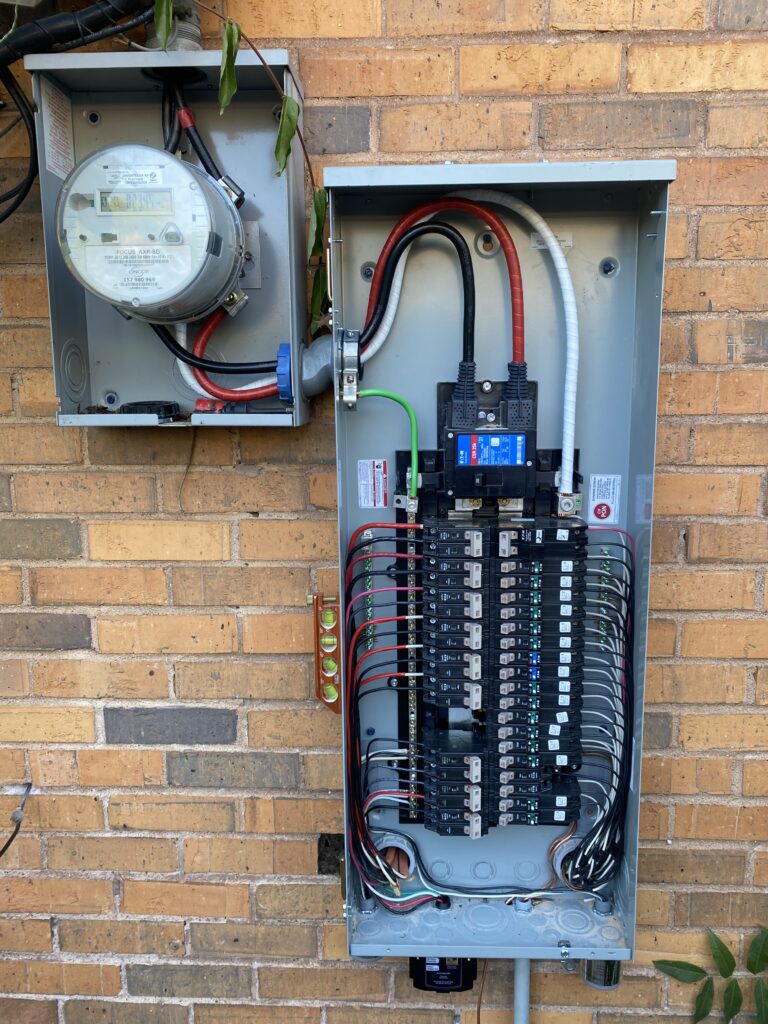
Your electrical panel is the heart of your home power system, and it must have room for a Level 2 home charger before installation begins. Adding a 48 amp charger demands significant capacity, and not every panel has that space available. An electrician evaluates your panel size and existing load to confirm it can handle the new circuit. Older homes often have smaller panels that need an upgrade before a high power charger can be added. Skipping this check leads to overloaded panels, tripped main breakers, and unsafe conditions. A proper assessment catches these issues before they become expensive problems.
When a panel lacks capacity, a service upgrade is often the right solution to support modern charging needs. An electrical service upgrade increases your home total power capacity to safely run a charger alongside everything else. This upgrade is a common and worthwhile improvement for homes adding EVs, hot tubs, or other large loads. A licensed electrician sizes the new service to match your present and future needs. The result is a home ready to handle your charger and any upgrades down the road. Planning ahead during this upgrade saves you from repeating the work later.
In some cases a smart load management device offers an alternative to a full panel upgrade. These devices monitor your home power use and adjust charger draw to avoid overloading the panel. This can let you add a charger without the larger expense of a service upgrade in certain homes. A professional electrician determines which approach fits your panel, your budget, and your charging goals. The right solution depends on your specific home, which is why an expert assessment matters. Either path ensures your charger runs safely without straining your electrical system.
Why Choose Wallace Electric for Your Level 2 Home Charger Installation
Wallace Electric is a family owned and operated electrical company that treats every home with care and respect. Our technicians are background checked and drug tested, so you can feel confident about who is working in your home. We provide professional white glove service on every job, leaving your space as clean as we found it. Our installations are always safe and code compliant, which protects your home and passes inspection the first time. We take ethos seriously, and that commitment shows up in honest pricing and careful workmanship. When you hire us, you get a team that genuinely cares about doing the job right.
We back our work with a five year parts and labor warranty available on qualifying services for lasting peace of mind. Financing options are available to make your Level 2 home charger installation affordable without delay. Our team also offers 24/7 emergency electrician services, so help is there when you need it most. We serve Burleson and the surrounding communities with fast, reliable, and friendly service. Every install is handled by a licensed professional who knows EV charging inside and out. This combination of skill, care, and support is why local drivers trust us with their charging needs.
Ready to power your EV the right way? Our team will assess your home, recommend the perfect charger, and complete a safe code compliant installation that charges your vehicle at full speed every night. We handle the dedicated circuit, the panel check, and any upgrades your home needs from start to finish. Want a faster, safer way to charge your EV at home? Click here for our EV charger installation service and let our experts handle the details. Call Wallace Electric today at (817) 476-7753 to schedule your Level 2 home charger installation and start charging with confidence.