
Why Your Circuit Breaker Keeps Tripping and When to Worry
A tripping circuit breaker is your electrical system doing its job, even though it feels like a nuisance in the middle of a hot Texas summer. When a breaker shuts off power, it stops too much current from flowing through wires that cannot safely carry the load. That single action prevents overheated wiring, melted insulation, and hidden house fires. Summer puts extra strain on your panel because your air conditioner, pool pump, and cooling equipment run for hours at a time. One trip after plugging in a space heater or a hair dryer is usually harmless. A breaker that trips over and over signals a deeper problem that needs real attention. Knowing the difference between a normal reset and a genuine warning sign protects your home and your family. This guide breaks down the true causes and the exact moments when you should call a licensed electrician.
What Causes a Circuit Breaker to Keep Tripping
Circuit breakers trip for three main reasons, and each one points to a different issue inside your electrical system. An overload happens when a circuit carries more current than its rating allows, which is common when several high draw appliances share one line. A short circuit occurs when a hot wire touches a neutral wire, sending a sudden surge of current through the breaker. A ground fault takes place when a hot wire contacts a grounded surface, such as a metal box or a damp floor. Each fault type has its own warning signs, and a trained electrician can tell them apart quickly. Understanding these causes helps you describe the problem accurately when you call for help. The right diagnosis saves time and prevents repeat visits to your home.
How an Overloaded Circuit Makes Your Circuit Breaker Keep Tripping
An overloaded circuit is the most common reason a breaker keeps tripping in a Texas home. Every circuit in your panel carries a rating, usually 15 amps or 20 amps, and that number sets the safe limit for current. When the devices on that line pull more power than the rating allows, the breaker senses the excess and shuts off. Summer makes this worse because window units, portable fans, and kitchen appliances often share the same circuit. A single wall outlet may feed several rooms, so the load adds up faster than most homeowners expect. Plugging a microwave, a toaster, and a coffee maker into one kitchen circuit can push it past its limit in seconds. The breaker trips to protect the wire from overheating inside the wall. That protection is exactly what keeps your home safe.
You can often spot an overload by noticing what you were using right before the trip. If the power cuts out every time you run the same two appliances together, the circuit is telling you it is full. Moving one of those devices to a different outlet on another circuit sometimes solves the problem for good. Older homes in Burleson and Fort Worth were wired for far less electrical demand than modern families create. A house built decades ago may have only a handful of circuits, while a modern home spreads the load across many. When your lifestyle outgrows your wiring, overloads become a daily frustration. Adding a dedicated circuit for a heavy appliance removes that strain and stops the repeat trips. A licensed electrician can map your panel and find the smartest fix for your household.
Ignoring a chronic overload does more than annoy you; it wears down your equipment over time. Each trip and reset places stress on the breaker mechanism, and a breaker that trips daily will fail sooner than one that rarely moves. Heat is the real enemy inside your walls, and a circuit that runs near its limit stays hot for long stretches. That constant heat bakes the wire insulation and slowly makes it brittle. Brittle insulation cracks, exposes conductors, and raises the risk of a short circuit later. What starts as a simple overload can grow into a genuine safety hazard if it is left alone. Getting ahead of the problem keeps repair costs low and your home protected. Need help balancing an overloaded panel? Click here for our circuit breaker repair service.
How a Short Circuit Makes Your Circuit Breaker Keep Tripping
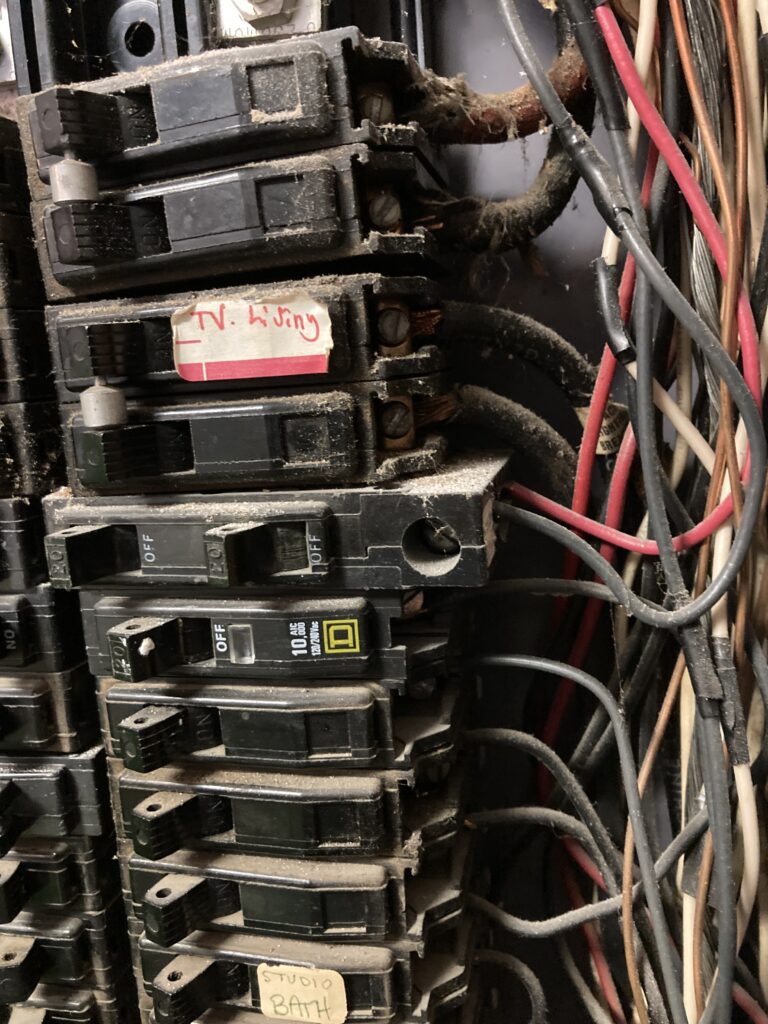
A short circuit is a more serious cause of a tripping breaker, and it deserves quick attention. This fault happens when a hot wire makes direct contact with a neutral wire, creating a low resistance path. Current surges through that path in an instant, spiking far above the breaker rating. The breaker responds immediately and cuts power to prevent the wire from melting or catching fire. You may hear a pop, see a spark, or notice a scorch mark near an outlet when a short occurs. Damaged cords, loose wire connections, and pest chewed insulation are frequent culprits behind these events. Unlike an overload, a short circuit will not resolve by moving an appliance to another outlet. The fault lives in the wiring or a device, and it needs a professional to trace it.
Finding the source of a short circuit takes methodical testing and the right tools. An electrician will isolate the circuit, inspect each outlet and switch, and check every connection along the line. Faulty appliances are a common source, so unplugging devices one at a time can help narrow the search. A frayed lamp cord or a cracked plug can short the moment it is energized. Rodents also cause shorts by gnawing through insulation inside walls and attics, a common issue in older homes. Moisture intrusion near an outdoor outlet or a damp room can create a path for current as well. Each of these situations calls for a careful hands on inspection rather than guesswork. Hunting a short without training risks shock and further damage to your system.
The danger of a short circuit is why you should never keep resetting a breaker that trips instantly. When a breaker snaps off the moment you flip it back on, the fault is still live and active. Forcing power back to a shorted wire can heat it to dangerous levels within seconds. That heat is how electrical fires start inside walls where you cannot see them. A breaker doing its job is your last line of defense against that outcome. Respect the trip, leave the breaker off, and call a licensed electrician right away. Fast action on a short circuit protects your home and everyone in it. If you smell burning or see sparks, treat the situation as an emergency and get help immediately.
How a Ground Fault Makes Your Circuit Breaker Keep Tripping
A ground fault is the third major reason a breaker keeps tripping, and moisture usually plays a role. This fault occurs when a hot wire touches a grounded surface, such as a metal outlet box, a pipe, or a wet floor. Current escapes its intended path and flows to ground, which the breaker detects as a dangerous leak. In wet areas like kitchens, bathrooms, garages, and outdoor spaces, ground faults are a real shock hazard. That is why building codes require GFCI protection in those locations across Texas homes. A GFCI breaker or outlet reacts to tiny current imbalances and cuts power in a fraction of a second. Summer storms and humidity raise the odds of a ground fault near outdoor outlets and pool equipment. Standing water and electricity form a combination no homeowner should take lightly.
Ground faults often show up around pools, hot tubs, and exterior outlets during the swim season. A pool pump that trips its breaker every afternoon may have moisture inside a connection or a failing motor. Landscape lighting and outdoor kitchens add more exposed circuits that face rain, sprinklers, and heat. When water reaches a live connection, the GFCI does exactly what it was designed to do and shuts the circuit down. Repeated ground fault trips near water are a clear message that a connection needs inspection. A licensed electrician can seal, reroute, or replace the compromised part and restore safe operation. Proper outdoor wiring keeps your summer gatherings running without constant interruptions. It also keeps swimmers and guests protected from a hidden shock risk.
Testing for a ground fault requires care because the hazard is direct contact with live current. An electrician checks the GFCI device first, since these units wear out and can trip without a true fault. Next comes an inspection of the wiring, the boxes, and any device connected to the circuit. Corroded terminals, damaged cables, and water damaged outlets are common findings in older exterior wiring. Fixing the root cause is far better than replacing a GFCI over and over. A properly repaired ground fault circuit restores both function and peace of mind. Skipping this repair leaves a live shock hazard in a place where people walk barefoot and wet. Around water, that risk is simply not worth taking.
When a Tripping Circuit Breaker Is a Sign to Worry
Not every trip means trouble, so it helps to know which signs point to real danger. A single trip after a lightning storm or a big appliance startup is usually a normal safety response. Trips that repeat within minutes, a panel that feels warm, or any burning odor push the situation into worry territory. These signals often point to worn breakers, loose connections, or wiring that has aged past its prime. Summer heat magnifies every weak point because your system runs hotter and for longer stretches. Learning to read these clues lets you act before a small fault turns into a fire. A breaker is a safety device, not a switch meant to be flipped back endlessly. When the same circuit keeps failing, the smart move is a professional inspection.
When Frequent Circuit Breaker Tripping Signals a Real Danger
Frequency is the first clue that separates a harmless trip from a serious one. A breaker that trips once a month after a predictable event is rarely a cause for alarm. A breaker that trips several times a day is telling you something is wrong on that circuit. The problem could be a growing overload, a developing short, or a breaker that has simply worn out. Each trip adds stress, and a stressed breaker loses its ability to protect the way it should. Over time a tired breaker may fail to trip at all, which removes your safety net entirely. That silent failure is far more dangerous than the trips themselves. Tracking how often a breaker trips gives your electrician valuable information for a fast diagnosis.
Pay attention to the pattern surrounding each trip, since the timing often reveals the cause. Trips that happen only when the air conditioner starts point to a motor drawing heavy startup current. Trips that occur at random with no clear trigger suggest a loose connection or an intermittent short. A circuit that fails only during rain likely has a moisture driven ground fault outside. Writing down what runs and when the trip happens turns a mystery into a solvable puzzle. This kind of detail helps a technician skip guesswork and go straight to the fault. The faster the cause is found, the less it costs to repair. Good notes are one of the most useful things a homeowner can provide.
There is a point where repeated tripping stops being an inconvenience and becomes a hazard. When a breaker trips daily and resists every reset, the underlying fault is active and getting worse. Continuing to force power onto a failing circuit invites overheating, arcing, and eventually fire. Arc faults in particular can smolder inside a wall long before anyone smells smoke. This is why modern codes require AFCI protection in many living areas of new homes. If your breaker fights you every time you reset it, stop and call for help. Living with a chronically tripping circuit is a gamble no family should take. Facing a breaker that will not stay on after hours? Click here for our emergency electrician service.
When a Warm Panel and Burning Smell Mean Your Circuit Breaker Is Failing
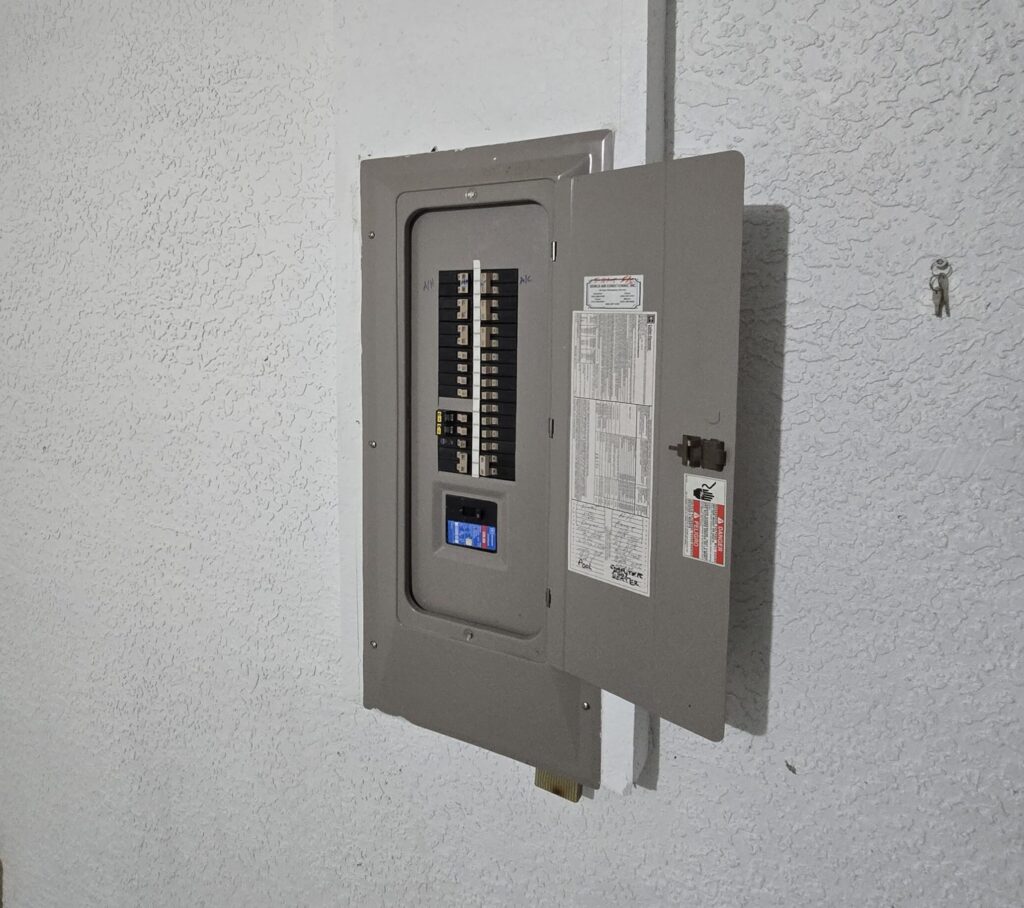
Your electrical panel should feel cool and quiet during normal operation. A panel that feels warm to the touch is a warning that something inside is generating excess heat. Heat in a panel usually comes from loose connections, corroded lugs, or a breaker that can no longer handle its load. As metal connections loosen, resistance rises, and rising resistance turns electrical energy into heat. That heat builds at the exact spot where the connection has failed. Left alone, the hot spot can char the busbar, melt insulation, and damage nearby breakers. A warm panel is never normal, and it deserves prompt attention from a licensed electrician. Opening the panel yourself is a risk best avoided.
A burning smell near your panel or outlets is one of the most urgent electrical warnings there is. That odor often means insulation is melting or a connection is arcing behind the cover. Melting plastic gives off a sharp, acrid smell that is hard to mistake once you notice it. If you catch that smell, shut off the main breaker if it is safe to reach and call for emergency help. Do not wait to see if the odor fades, because arcing can ignite surrounding material fast. Discolored outlets, scorch marks, and buzzing sounds often accompany that burning smell. Each of these signs points to a connection that is failing under load. Every one of them calls for immediate professional service.
A failing breaker sometimes gives subtle hints before it quits entirely. It may feel loose in its slot, trip with no clear load, or refuse to reset cleanly. Breakers are mechanical devices, and their internal parts wear out after years of thermal cycling. Summer heat accelerates that wear because the panel already runs warm during peak cooling season. Replacing a worn breaker is a straightforward job for a trained electrician and restores reliable protection. Matching the correct breaker type and rating to your panel is essential for safety and code compliance. Guessing on a replacement can leave your circuit unprotected or create a new hazard. This is one repair that always belongs in professional hands.
When Old Wiring Causes Your Circuit Breaker to Keep Tripping
Aging wiring is a quiet but common reason breakers trip in older Texas homes. Insulation breaks down over decades of heat, and brittle insulation exposes conductors to contact and faults. Homes wired in earlier eras were never designed for today’s electrical demand. Central air, EV chargers, and modern kitchens all draw far more power than older systems anticipated. As demand climbs, aging circuits run hotter and trip more often under the strain. What looks like a nuisance trip may be tired wiring reaching the end of its service life. An inspection reveals the true condition of the wiring behind your walls. Knowing that condition helps you plan repairs before a failure forces the issue.
Certain wiring types raise extra concern and deserve a professional evaluation. Aluminum branch wiring from certain decades is known to loosen and overheat at connections. Cloth insulated wiring found in very old homes becomes fragile and unsafe as it ages. Improper past repairs, backstabbed outlets, and overloaded junction boxes add hidden risk throughout a house. Each of these conditions can cause repeated tripping that no simple reset will fix. An electrician can identify these problems and recommend a safe, code compliant correction. Sometimes the answer is a targeted repair, and sometimes it is a rewire of a problem area. A clear assessment lets you make an informed decision about your home.
Old wiring paired with an undersized panel creates a double problem for many homeowners. A small panel with too few circuits forces heavy loads onto lines that were never meant to carry them. That crowding leads to constant overloads and the tripping that comes with them. Upgrading the panel and the wiring together often solves the root cause for good. A modern panel adds capacity, spreads the load, and supports the demands of a current household. It also brings your system up to today’s safety standards and code requirements. This kind of upgrade is an investment in both convenience and protection. A licensed electrician can size the right solution for your home and family.
Why You Need a Licensed Electrician to Fix a Tripping Circuit Breaker
A tripping breaker is a message from your home’s safety system, and that message deserves a proper response. Some causes are simple, and others hide serious hazards behind the wall. A licensed electrician has the training, tools, and experience to tell the two apart with confidence. Guesswork around live electricity risks shock, fire, and costly damage to your property. Professional diagnosis finds the true cause and fixes it right the first time. For your family’s safety, a repeat tripping circuit is a job worth handing to an expert.
Why Professional Circuit Breaker Repair Protects Your Home
Professional circuit breaker repair starts with a full diagnosis rather than a quick guess. An electrician tests the circuit, measures the load, and inspects every connection along the line. That thorough approach finds the real fault instead of masking the symptom. A correct repair restores safe operation and removes the hazard at its source. Doing the job right protects your wiring, your appliances, and everyone in the house. This is the kind of work that keeps a home safe for years.
Trained electricians also work to strict safety and code standards on every visit. They match the correct breaker type and rating to your specific panel. They tighten connections to the proper torque so heat does not build at a loose lug. They confirm that GFCI and AFCI protection is present where the code requires it. Each of these steps reduces risk and improves the reliability of your system. Code compliant work also protects your home value and your insurance coverage.
Skipping professional repair to save a little money often costs far more later. A hidden fault left unfixed can damage appliances or start a fire inside a wall. Repeated resets wear out equipment and mask a problem that keeps growing. A qualified electrician stops that cycle and gives you a lasting solution. Planning a panel upgrade for a growing home? Click here for our electrical panel installation service. The peace of mind that comes with a proper repair is well worth the call.
Why Timely Circuit Breaker Service Saves You Money
Timely circuit breaker service saves money by catching small problems early. A loose connection fixed today costs far less than the damage it causes tomorrow. Repeated tripping wears out breakers, appliances, and wiring over time. Each of those replacements adds up when a problem is ignored for months. Early service stops that slow drain on your wallet. Acting fast turns a large future repair into a small routine fix.
An efficient electrical system also keeps your energy costs in check during summer. Faulty connections waste energy as heat instead of putting it to work. A well maintained panel delivers power cleanly to your cooling equipment. That efficiency shows up as steadier performance and fewer surprises on your bill. Reliable circuits also protect sensitive electronics from damage. Small maintenance choices add up to real savings across the year.
Preventive service also spares you the cost and stress of an emergency call. A planned repair happens on your schedule and at a predictable price. An emergency happens at the worst moment, often on the hottest night of the year. Handling issues early keeps you out of that stressful position. A quick inspection now can prevent a total outage later. Choosing timely service is simply the smarter financial move.
Why Choose Wallace Electric for Your Circuit Breaker Repair
Wallace Electric is a family owned and operated company serving Burleson and the surrounding communities. Our technicians are background checked and drug tested for your complete peace of mind. We provide professional white glove service in every home we enter. Each job is completed with safe, code compliant workmanship you can trust. We treat your home with the same care we would give our own. That local commitment is at the heart of everything we do.
We stand behind our work with a 5 year parts and labor warranty available on qualifying services. Financing options are available to make larger electrical repairs manageable for your budget. Our 24/7 emergency electrician service means help is ready when you need it most. We arrive on time, explain the problem clearly, and fix it right. Honest communication and fair pricing guide every visit. You always know what to expect before we begin.
When your circuit breaker keeps tripping, the team at Wallace Electric is ready to help. We diagnose the true cause and deliver a lasting, safe repair for your home. Our service area covers Burleson, Fort Worth, Cleburne, Mansfield, Arlington, and nearby cities. We are proud to keep local families safe and comfortable through every Texas summer. Call us today at (817) 476-7753 to schedule your circuit breaker repair. Trust Wallace Electric to protect your home with expert electrical service.